
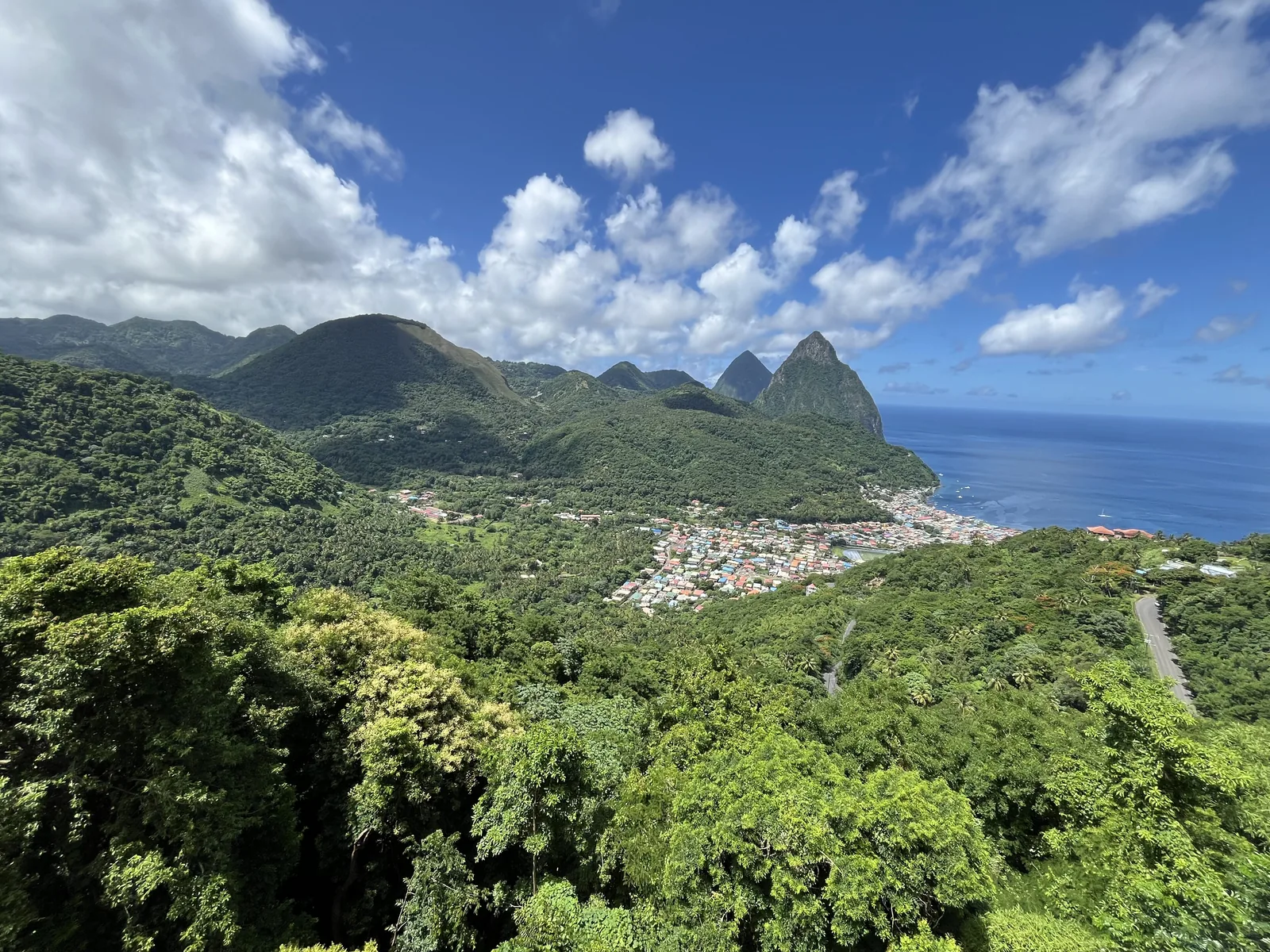
 Saint Lucia
Photo by DavidMPyle, CC BY 4.0, via Wikimedia Commons. Resized for this page.
Saint Lucia is one of the most instantly recognizable islands in the Caribbean, thanks to the Pitons, twin volcanic spires that rise from the sea near Soufrière. English is the official language, and Saint Lucian Creole is widely spoken. The Pitons and the surrounding land and marine area form a UNESCO World Heritage Site, with rainforest, volcanic beaches and the mineral-rich springs around Soufrière. The west coast is the heart of the island's tourism, with sheltered bays, hillside hotels and views that change with every curve of the road.
Travelers also come to hike in the rainforest, snorkel or dive, and spend time in and around the capital, Castries, or the north-coast town of Gros Islet, known for its weekly street party.
December to April is the driest and busiest season. The rainy months are greener and quieter, and June to November is the hurricane season.
Saint Lucia
 Saint Lucia
 Saint Lucia
: Money
Saint Lucia's currency is the East Caribbean dollar (XCD), often written as EC$. It is pegged to the US dollar, and US dollars are widely accepted in hotels, restaurants and tourist shops.
- Cash vs. card: Cards are widely accepted at hotels, restaurants and larger shops, especially around the main west-coast resorts and in Castries. Carry cash for local buses, smaller vendors, some water taxis and markets. Confirm whether a quoted price is in East Caribbean or US dollars; change is often given in local currency.
- ATMs and fees: ATMs are available in Castries, at or near the airport and in other tourist areas, and they generally dispense East Caribbean dollars. They can be less convenient around Soufrière and more rural parts of the island, so withdraw ahead of those stays. Fees may apply.
- Tipping: Hotels and restaurants often add a service charge of around 10%. If it is already on the bill, an extra tip is optional. If not, around 10 to 15% is customary in restaurants. Boat crews, guides and taxi drivers are typically tipped in cash.
- Exchanging money: Banks and hotel desks can change cash. Clean US dollar notes are the easiest foreign currency to use or exchange. Choose to be charged in East Caribbean dollars if a machine offers a conversion to your home currency.